SoFi Stadium Gears Up for Global Spotlight with World Cup Football, Super Bowl and Olympic Transformations
SoFi Stadium in Inglewood, California — originally built as a state‑of‑the‑art home for the NFL’s Los Angeles Rams and Chargers — is being transformed into one of the world’s most versatile sporting arenas as it prepares to host key matches for the 2026 FIFA World Cup, the Super Bowl in 2027 and major events at the 2028 Los Angeles Olympics, including the opening and closing ceremonies and Olympic swimming competitions. These ambitious back‑to‑back assignments require extensive structural and operational changes that showcase both the stadium’s flexibility and Los Angeles’ rising global sports profile.
Over the next three years, SoFi Stadium will undergo a remarkable sequence of transformations to meet the very different demands of elite football, international soccer and Olympic aquatics. For the World Cup, the venue will convert its artificial turf into a FIFA‑compliant grass pitch and reconfigure seating to accommodate a larger playing surface. Later, under Olympic plans, the stadium’s vast interior will house temporary swimming facilities, spotlighting aquatic competition in front of tens of thousands of fans. With its vast size, massive Infinity Screen and cutting‑edge infrastructure, SoFi’s evolving role highlights Los Angeles’ ambitions to host world‑class events in an innovative, multi‑use environment.
Read More ›
World Cup Preparations and Stadium Modifications
Over the summer of 2026, SoFi Stadium is slated to host eight matches at the FIFA World Cup, including the U.S. national team’s opener and a quarter‑final fixture. To meet FIFA’s strict pitch requirements, the venue will temporarily transform its playing surface, raising the field and installing cool‑season hybrid grass — a substantial overhaul from its usual artificial turf setup used for NFL games.
This includes removing about 400 retractable seats and elevating the pitch roughly 30 inches on a substructure that allows airflow beneath the grass. The hybrid field is designed to support intense World Cup play and ensure compliance with international standards while maintaining spectator comfort under the stadium’s translucent roof.
Read More ›
These changes represent one of the most significant temporary conversions in modern stadium history, demonstrating how a primarily football‑oriented venue can be adapted for international soccer’s unique demands. Organizers and facility officials emphasize that the goal is to deliver a playing surface worthy of the world’s biggest tournament without sacrificing the fan experience.
Super Bowl and Olympic Ambitions
Following the World Cup, SoFi Stadium will continue its packed schedule by hosting Super Bowl LXI in 2027, reinforcing its reputation as a top destination for marquee sporting events. But its role for the 2028 Los Angeles Olympics takes innovation a step further: the stadium will be a centrepiece for the opening and closing ceremonies, as well as the venue for Olympic swimming competitions — an unusual but ambitious use of a football stadium.
The Olympic swimming setup will require the installation of temporary natatorium facilities inside the stadium, turning the familiar gridiron into a world‑class aquatic arena. Stadium executives noted that staging swimming events in a venue of this scale was once an unlikely vision, but logistical experimentation at previous events has demonstrated its feasibility. This adaptability underscores Los Angeles’ broader strategy to maximize existing infrastructure and generate memorable, large‑scale competition environments without building wholly new facilities.
Read More ›
Iconic Features and Operational Scale
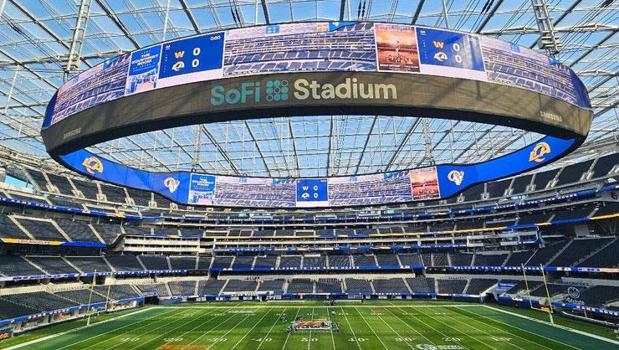
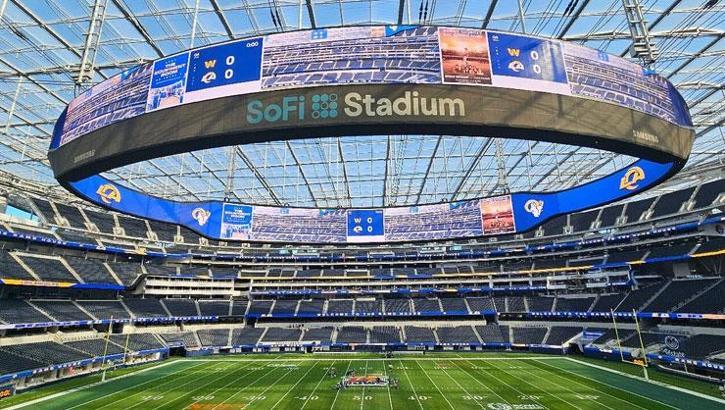
One of the stadium’s standout features is its massive dual‑sided Infinity Screen, a 70,000‑square‑foot, 360‑degree central video display that adds unmatched visual immersion to live events. Elevated more than 120 feet above the field, this board and the buzzing control room beneath it play a crucial role in everything from NFL match days to major multi‑sport events, supporting complex broadcast operations and enhancing the overall spectator experience.
With roughly 3.1 million square feet of space, SoFi’s structural scale was deliberately designed for flexibility, allowing it to host not only football games and concerts but also the world’s most prestigious athletic competitions. Facility leadership has said that the aim isn’t just to host these events but to execute them flawlessly and cement the stadium’s legacy as a symbol of Los Angeles’ place on the global sporting stage.
Read More ›
Legacy and Global Impact
SoFi Stadium’s evolving schedule — transitioning seamlessly from NFL showdowns to World Cup spectacles and Olympic competitions — reflects a broader trend in multi‑purpose sports architecture. As the world looks ahead to the 2026 World Cup and LA28, the stadium stands as a testament to ambitious planning, engineering adaptability and the potential of modern venues to unify diverse sporting traditions under one roof. Success in these events could set new benchmarks for how future stadiums are designed and operated for global mega‑sporting spectacles.