How Long Is a Basketball Court? Official Dimensions & Layout Guide
Whether it’s the NBA, international competition or college — basketball courts are built to precise measurements. From overall size to three-point arcs and painted “key” zones, each line matters. Discover the official dimensions and layout differences that shape how we play and view the game.
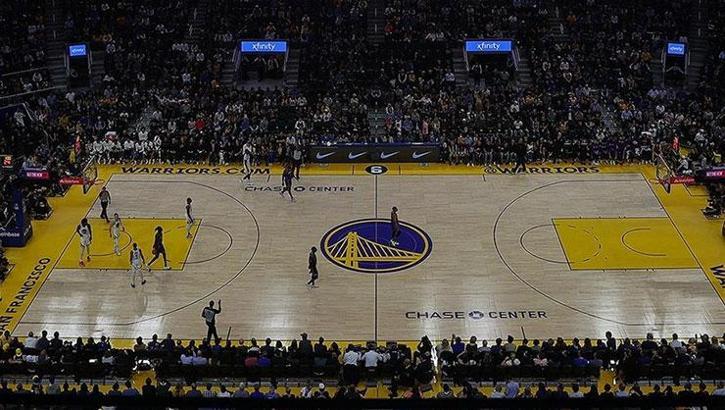
Behind every fast break, buzzer-beater, and alley-oop lies a court built to exact specifications. Though the basic shape is a rectangle with rims at both ends, basketball courts differ slightly depending on the league or governing body. Understanding these dimensions — the length, width, arc of the three-point line, and the paint — gives insight into how the game is structured around space. This guide lays out the official measurements for the major court standards today.
Read More ›
How Court Dimensions Are Defined — Key Concepts
● Overall court size: the full playing rectangle defined by sidelines and baselines.
● Free throw (foul) line & key / paint area: central areas under the basket used for free throws, post play, and defensive restrictions.
● Three-point arc / line: defines the distance beyond which shots count for three points.
● Backboard & rim height: consistent across most official play levels.
● Line markings & court layout: including center circle, mid-court line, restricted area, sidelines, endlines.
These elements are constant across levels — what changes is the exact measurements.
Official Court Sizes & Layouts by Governing Bodies
Here are the standard full-court dimensions for different levels of competitive basketball:
Read More ›
Governing Body / Level | Court Length | Court Width
NBA (Pro) / Typical U.S. College (NCAA) | 94 ft (≈ 28.65 m) | 50 ft (≈ 15.24 m)
FIBA (International) | 28 m (≈ 91.86 ft) | 15 m (≈ 49.21 ft)
Typical U.S. High School (where used) | 84 ft (≈ 25.6 m) | 50 ft (≈ 15.24 m)
Key Internal Measurements & Markings (Rims, Free-Throw, 3-Point, “Key”)
No matter the league, some elements remain consistent across courts — others vary.
● Rim Height: 10 ft (3.05 m) above the playing surface in all official levels.
● Free-Throw (Foul) Line: 15 ft (≈ 4.57 m) from the front of the backboard.
● Backboard Dimensions & Position: Backboard typically 6 ft wide by ~42 in tall; it extends roughly 4 ft beyond the baseline into the key.
Three-Point Line / Arc
● NBA: 23 ft 9 in (≈ 7.24 m) at top of arc, 22 ft (≈ 6.7 m) in corners.
● FIBA: 6.75 m (≈ 22.15 ft) from basket center.
● NCAA (College, U.S.): courts use same overall size as NBA, though three-point line distance may differ based on current rules.
● High School: typically a shorter three-point distance (varies by region/level).
“Key” / Paint / Lane Width
● NBA: The paint (“key”) is wider — around 16 ft (≈ 4.88 m).
● FIBA: The key width is slightly similar: around 4.9 m / ~16.08 ft.
● College / Older systems: Some courts may use a narrower “key” (e.g. 12 ft) depending on local regulations or older layouts.
Read More ›
Why Dimensions Matter — Practical Effects
● Spacing & Play Style: A wider or narrower key affects post play and paint penetration, while the three-point line distance influences spacing and long-range shooting strategies.
● Standardization: Uniform court sizes across a league ensure fairness — players know exactly how much space they have.
● Facility Planning: For gyms, arenas or outdoor courts, knowing exact dimensions is critical for layout, spectator seating, safety margins and compliance with governing-body rules.
● Global Variation: International (FIBA) courts are slightly smaller than NBA courts — this subtle difference can influence how plays develop, especially in transition or spacing-based offenses.
What the Source (Recreation Unlimited) Adds — Court Diagrams & Variation Awareness
According to the article from Recreation Unlimited:
● While “inner court markings” (foul line, backboard/rim height) remain consistent across levels, overall external dimensions vary depending on league/level (professional, college, international, high-school, junior-high).
● Their diagrams show visual layouts for NBA, FIBA, NCAA and high-school courts — offering a helpful comparison to see how interior lines shift relative to size.
Read More ›
This underlines that when you hear “a basketball court,” the exact layout depends on where and under which rules the game is played.
A basketball court isn’t “one size fits all.” While many aspects are standard — like rim height and foul-line distance — the total floor dimensions, three-point lines, and paint width change depending on whether the court is used for NBA, international, college, or high-school play. Whether you’re building a court, watching an international match, or playing in a local league — knowing these measurements can deepen your understanding of how the game is shaped by space and rules. If you like, I can embed a full infographic diagram summarizing NBA vs FIBA vs NCAA court layouts side by side— useful for players, coaches, or fans.