How to Catch in Baseball: Rules and What Happens When You Catch the Ball
Catching the ball is one of the most fundamental and thrilling moments in baseball — a play that can end an inning, send a runner back to the dugout, or spark a rally. But behind the simple phrase “he caught it” lies a set of clear rules that determine when a catch is legal, how it affects the game, and why it matters for both defense and offense.
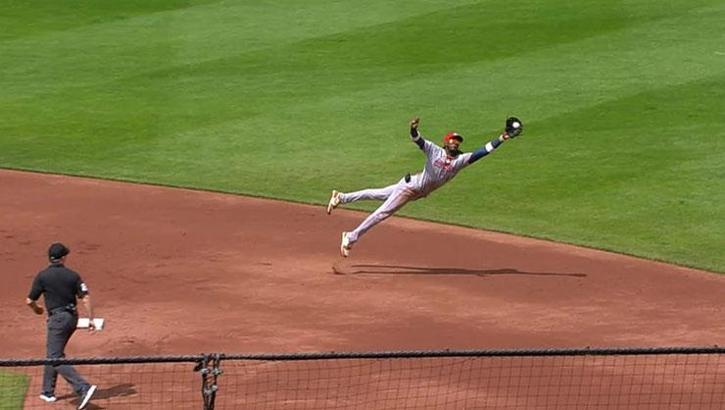
In baseball, a catch occurs when a defensive player gains secure possession of a batted ball before it touches the ground and maintains control long enough to demonstrate the catch, often by continuing with the act of throwing or retaining the ball until firmly in hand. Legal catches can lead to outs, end innings, and thwart rallies, but the rules are specific about what counts — including how long the fielder must hold the ball and what happens if contact with the ground occurs. Understanding these rules gives fans deeper insight into defensive plays, scoring decisions, and how fielders influence the flow of the game.
Read More ›
What Qualifies as a Legal Catch
A catch must occur before the ball touches the ground. Fielders often make dramatic efforts to snare fly balls or line drives in mid-air, but timing and control are key.
Once the fielder has secure possession, they must exhibit complete control of the ball long enough to demonstrate that it is a catch, often by transitioning into a throw or showing clear ball retention. Simply contacting the ball is not enough if it is subsequently dropped without that control.
In-Flight Catches and Fair Territory
Catches can be made in any part of the field — in fair territory, foul territory, or even while the player is over the out-of-play area, as long as the ball has not touched the ground.
Read More ›
Fielders often chase balls near fences, alleys, or over dugouts, and the same rule applies: if the ball is grabbed before hitting the ground and the player maintains control, it’s a catch and the batter is out.
What Happens After a Catch: Defensive Outs
When a fielder legally catches a batted ball, the batter is immediately out. This is one of the simplest ways to record an out, and it is crucial for inning control.
In addition, if runners were attempting to advance at the moment of the catch — such as tagging up on a fly ball — the defense can then throw to a base to try to retire those runners. This adds complexity to both offensive and defensive strategy.
What Does Not Count as a Catch
Not all airborne grabs qualify as catches. If a fielder does not maintain possession long enough, especially if the ball is bobbled or lost upon contact with the player’s body or glove, it is not considered a catch.
Likewise, if the ball hits the ground prior to the fielder possessing it, even briefly, the play is treated as a live ball and not a catch — unless the ball is first touched and then controlled in a way that fulfills the catch requirements.
Tagging Up After a Catch
One unique aspect of baseball is the concept of tagging up. If a runner is on base when a fly ball is caught, they must first touch their starting base before attempting to advance.
Read More ›
Tagging up adds strategic depth — runners weigh the risk of advancing versus holding their position, depending on the game situation and the strength of the defense’s arm.
Catches and Scoring Notation
In scoring and statistics, a legal catch that results in an out is straightforwardly recorded as an out for the batter. Fielders’ actions on catches also influence defensive statistics, including putouts and assists.
A catch by an outfielder, for example, contributes to their putout total, while relayed throws after a catch may contribute to assists for infielders and outfielders alike.
Why Catching Is Fundamental to Defense
Catching doesn’t just erase a batter’s chance to reach base — it shifts momentum, ends rallies, and can energize teammates and fans alike. Because the rules specify clear criteria for what counts as a legal catch, understanding them helps fans appreciate the athleticism and precision involved in arguably the most basic — yet most impactful — defensive play in baseball.
Read More ›
Whether it’s a diving grab near the foul line, a high leap at the fence, or a routine pop-up in the infield, catching remains one of the most exciting and important elements of the game.